Bitcoin on Base
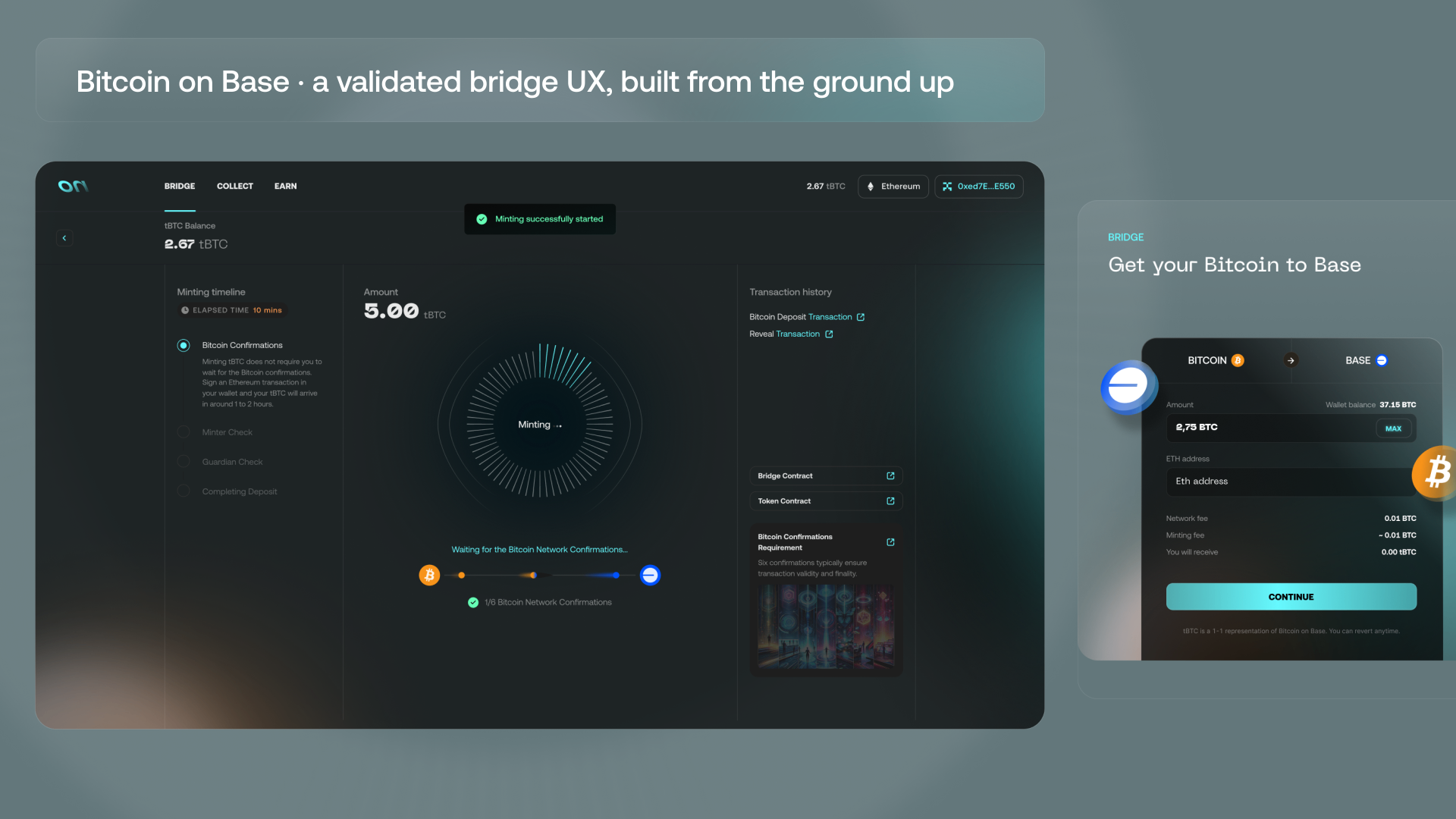
A validated Bitcoin bridge experience, rebuilt from the ground up in a new brand language so it reads as a native Base product rather than a transplanted network dashboard.
Problem
Base was opening a space that folded the reach of consumer web into the guarantees of onchain infrastructure, and it was open to nearly everyone. Bitcoin holders were the exception. To take part they had to swap their BTC into something else first, which asked them to give up the one asset they were least willing to part with.
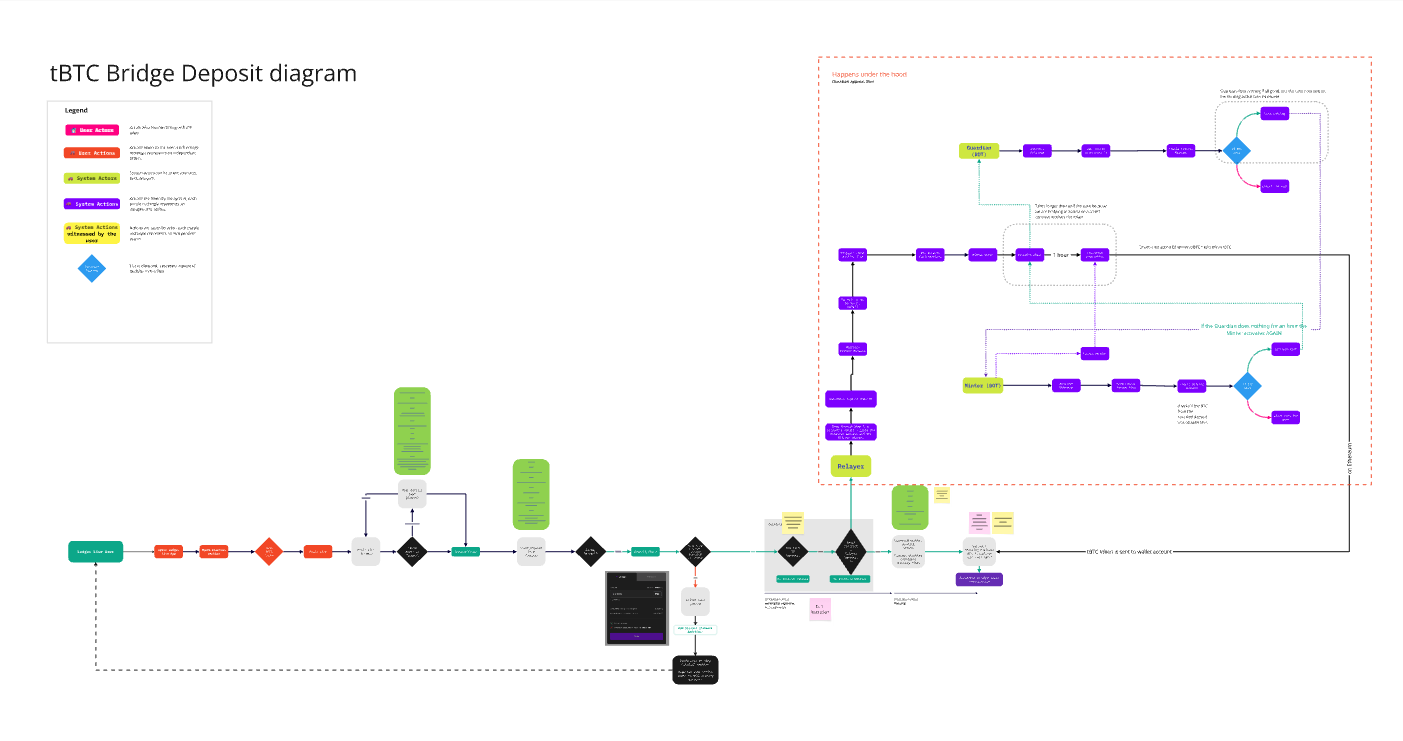
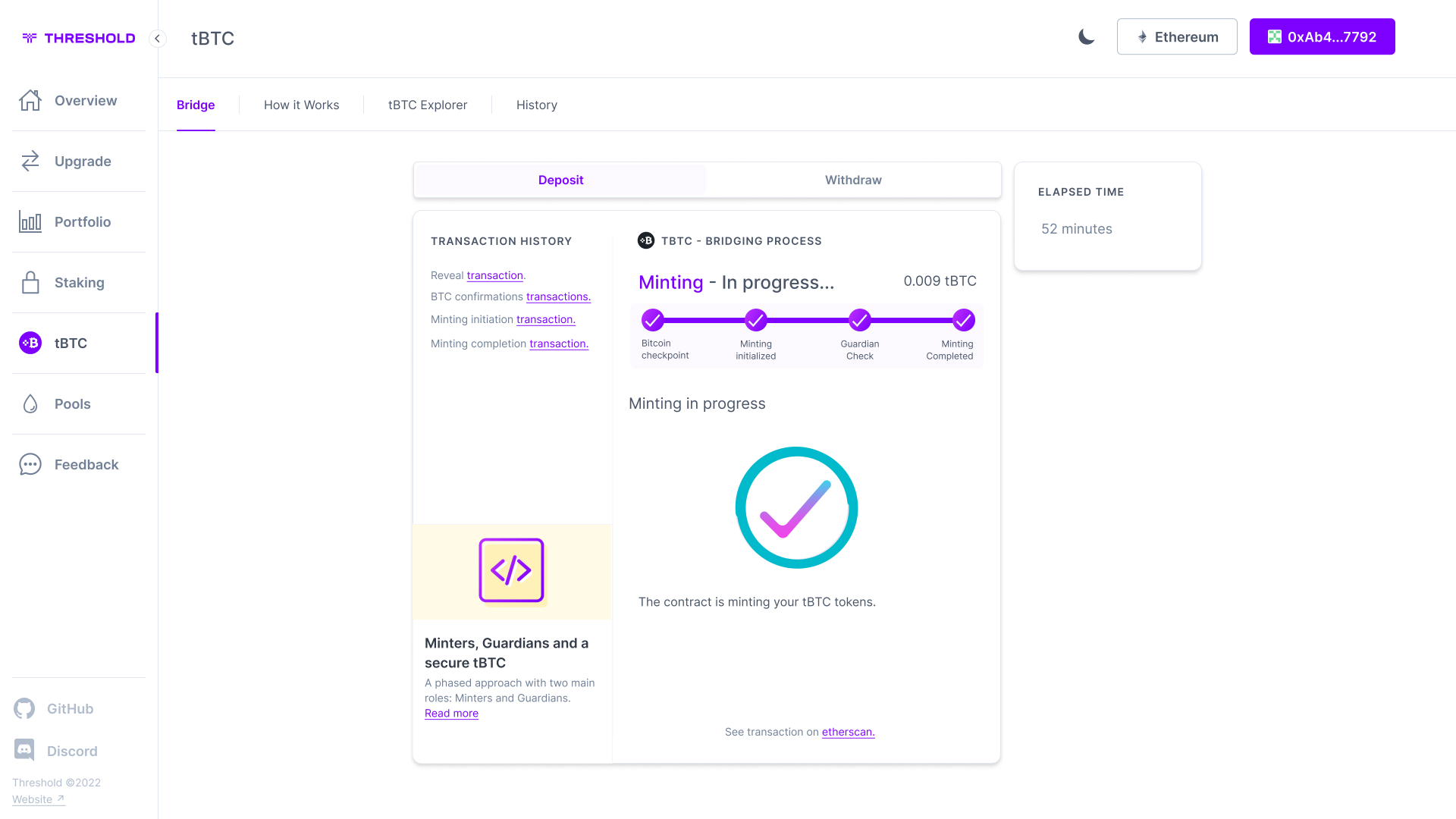
tBTC was invited by Base to remove that tax and bring the first native, fully decentralized Bitcoin representation to the network, so holders could stay in Bitcoin and still reach the Ethereum L1 and L2 economy. The UX flow itself was settled, since I had already designed and validated that bridging experience for tBTC on the Threshold dashboard.
What did not translate was the context around it. A proven flow bound to Threshold's design system and parked inside a network dashboard would never read as a first-class Base product, and on Base that gap is the whole game.
Discovery
There was no new research round here, and I would rather say that plainly than dress reasoning up as findings. What I was designing against was a set of fixed constraints. The UX was already settled and the pain points from the earlier tBTC rounds were already understood and already solved in the flows, so my team and I were not free to touch that and had no reason to want to.
That left the visual language as the real variable, bounded by two things. Base had its own art direction that the product needed to feel part of, and Base’s audience would judge a standalone tool against every other app in that suite rather than against a web3 network dashboard.
The harder constraint was internal to me. I had designed the bridge this was built on, which meant my own defaults were the first thing likely to seep back in.
Solution
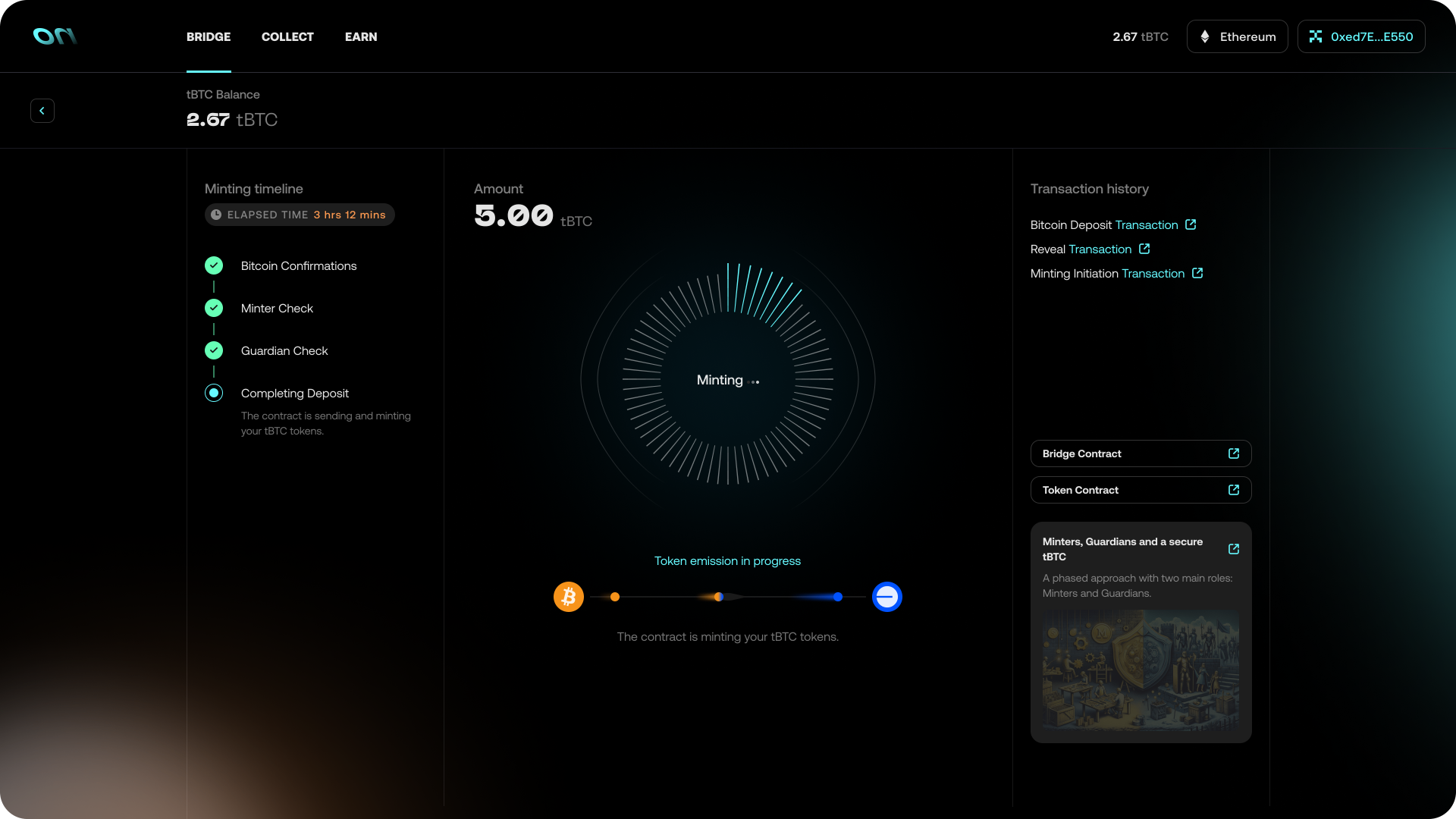
The team broke from the Threshold style guide completely and stood up a new brand identity, On, drawn from Bitcoin on Base. Our work sat in the interface. Because the product no longer had to live inside a dashboard and stood on its own, my team and I had room to rebuild it from the ground up in that new language rather than reskin the old one.
The platform was also meant to be more than a bridge, surfacing staking pools and on-chain campaigns alongside the flow, so the shell had to work as a product home rather than a single tool.
I kept the flows deliberately intact, since reworking a validated experience would have thrown away hard evidence for no reason, which let me spend my time where the value actually was, on the visual cues and the styling.
Two heuristics carried the work.. Consistency and standards meant aligning to Base’s art direction so the bridge sat inside the suite as a peer rather than a transplant. Match between the system and the real world meant designing to what Base’s users already expected a native tool to look and behave like.
To keep my own patterns out, I treated every element as a project I had never worked on before and styled it fresh rather than reaching for what had worked on Threshold.
Outcome
The app shipped in its new visual language and stood on its own as a product. What came next is the ordinary arc of infrastructure work at this layer.
Threshold consolidated its Bitcoin tooling, and the standalone apps gave way to a single unified bridge that mints, moves assets across chains, and handles staking in one place, which is the live product now. Native Bitcoin-to-Base movement, the thing this project set out to solve, sits inside it.
Somewhere along the way I stopped judging a project by whether its original shell survived and started judging it by whether the work held up once someone else inherited it. This one did. The interface carried into the consolidation intact.
Takeaway. What I kept was the discipline of treating the familiar as unfamiliar. Solve a problem once and the reflex is to reach for the same answer, and that reflex is precisely what a new brand and a new audience cannot afford.
Forcing each element to prove itself again, as if I had no history with it, is what let the product belong to Base instead of quietly still belonging to Threshold. It is the habit I trust most now when I move between contexts, because the work that travels well is the work that was never on autopilot.